
The Ancient Legend of Sri Agastheeswara Swamy
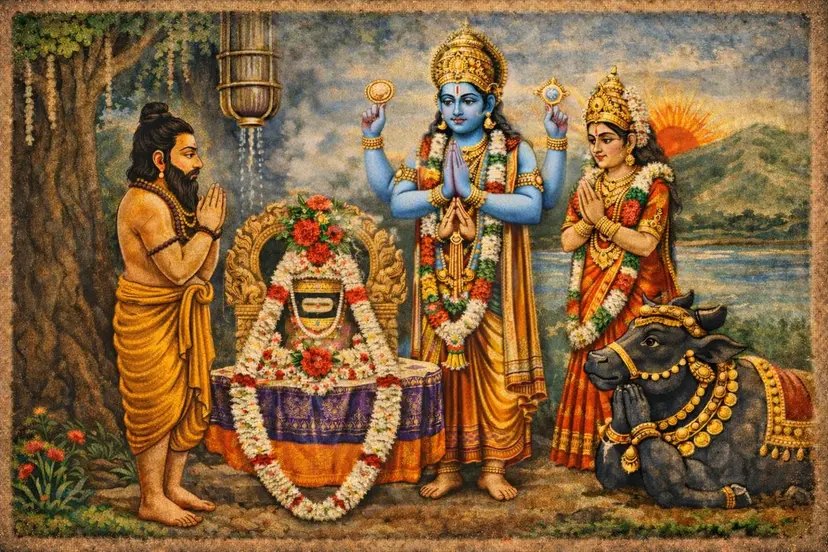
India is a land where sacred stories, ancient temples, and spiritual traditions have been carried from one generation to another. Among these revered traditions is the story of Sri Agastheeswara Swamy, a form of Lord Shiva associated with the great sage Agastya Maharshi.
The name Agastheeswara brings together two sacred identities — Agastya, the revered sage, and Eeswara, Lord Shiva. The legend reminds devotees of the deep connection between devotion, wisdom, and the divine.
Who Was Agastya Maharshi?
Agastya Maharshi holds a special place in Hindu traditions. He is described in ancient scriptures and traditional accounts as a great sage known for his wisdom, spiritual discipline, and devotion to Lord Shiva.
Several legends are associated with Agastya Maharshi.
One of the most famous stories tells of a time when the gods, sages, and divine beings gathered at Mount Kailash for the sacred wedding of Lord Shiva and Goddess Parvati.
As everyone gathered in the north, the Earth was believed to have become unbalanced because of the enormous gathering.
Lord Shiva then instructed Agastya Maharshi to travel south and restore balance to the Earth.
Obeying the divine command, Agastya journeyed southward.
Along his journey, the great sage is traditionally believed to have worshipped Lord Shiva at several sacred places.
The Birth of Agastheeswara
According to local and regional traditions, places associated with Agastya Maharshi became sacred centres of Shiva worship.
The Shiva Lingas worshipped at such places came to be revered as Agastheeswara — Lord Shiva worshipped by or associated with Agastya Maharshi.
The story carries a beautiful spiritual message.
Agastya Maharshi, despite being a great sage himself, remained devoted to Lord Shiva. His journey represents humility, obedience to divine purpose, and unwavering devotion.
Agastya Maharshi's Journey to the South
Agastya's journey is more than a geographical journey in traditional narratives.
It represents the movement of spiritual wisdom from one place to another.
As the sage travelled through the southern regions, numerous places became connected with his name and spiritual presence. Temples, sacred waters, hills, and Shiva Lingas associated with Agastya continue to be respected by devotees.
The traditions surrounding these sacred places may differ from one region to another, but the central theme remains the same:
The devotion of Agastya Maharshi towards Lord Shiva. Why Is Sri Agastheeswara Swamy Revered?
Lord Shiva is worshipped in countless forms throughout India. Agastheeswara Swamy holds a special significance because the tradition connects the deity with the spiritual legacy of Agastya Maharshi.
For devotees, visiting an Agastheeswara temple can be an opportunity to:
The Spiritual Message of Agastheeswara
The story of Agastheeswara carries several timeless values.
1. Devotion
Agastya Maharshi's relationship with Lord Shiva reminds devotees that true devotion is rooted in sincerity and dedication.
2. Humility
Even a great sage is portrayed as following the divine command with humility.
3. Purpose
Agastya's journey was undertaken for a greater purpose — to restore balance.
4. Spiritual Discipline
Agastya Maharshi is traditionally remembered as a sage of deep knowledge, meditation, and discipline.
5. Balance
Perhaps the most beautiful message of the legend is the importance of balance.
The story of Agastya travelling south to balance the Earth can also be understood symbolically: spiritual life requires balance between knowledge, devotion, action, and inner peace.
The Sacred Connection Between Agastya and Shiva
Agastya Maharshi appears throughout Hindu traditions as a figure associated with wisdom and spiritual knowledge.
His connection with Lord Shiva makes the Agastheeswara tradition especially meaningful for Shaiva devotees.
The Shiva Linga represents the divine presence of Lord Shiva, while the association with Agastya adds another layer to the sacred story — that of a great sage offering his devotion to the Supreme.
This combination of wisdom and devotion continues to inspire generations of devotees.
A Tradition That Lives On
Ancient legends remain alive not simply because they are told, but because they continue to be experienced.
Every generation discovers these stories in its own way — through temple visits, family traditions, festivals, prayers, Sanskrit and regional literature, and the stories shared by elders.
The story of Sri Agastheeswara Swamy is part of this living spiritual heritage.
Whether one visits the temple as a devotee, a pilgrim, or simply as someone interested in India's ancient traditions, the story offers an opportunity to pause and reflect.
Experience the Divine Through Devotion
The legend of Sri Agastheeswara Swamy is ultimately a story of a great sage and his unwavering connection with Lord Shiva.
Agastya Maharshi's journey reminds us that spirituality is not only about reaching a destination. It is also about the discipline, devotion, humility, and purpose carried along the way.
As devotees offer prayers before Lord Agastheeswara Swamy, the ancient story continues to live — connecting the present with a sacred past and reminding us of the enduring power of faith.
Om Namah Shivaya.
Frequently Asked Questions
Who is Sri Agastheeswara Swamy?
Sri Agastheeswara Swamy is a revered form of Lord Shiva associated in tradition with the great sage Agastya Maharshi.
Who was Agastya Maharshi?
Agastya Maharshi is one of the highly revered sages in Hindu traditions and is remembered for his wisdom, spiritual discipline, and devotion.
Why is Agastya associated with Lord Shiva?
Traditional legends describe Agastya Maharshi as a devoted worshipper of Lord Shiva and connect his journey through southern India with several sacred Shiva temples and Lingas.
What does the story of Agastya's journey symbolize?
The story is traditionally understood as representing divine obedience, spiritual purpose, humility, and the restoration of balance.
What mantra is commonly associated with Lord Shiva?
A widely used Shiva mantra is “Om Namah Shivaya.” It is traditionally recited by devotees during prayer, meditation, and Shiva worship.
--- A Note on Tradition
Stories surrounding Sri Agastheeswara Swamy and Agastya Maharshi are preserved through different scriptures, regional traditions, temple histories, and oral traditions. Details can therefore vary between locations and communities. This article presents the story as a devotional and cultural account rather than as a single historical record.
The name Agastheeswara brings together two sacred identities — Agastya, the revered sage, and Eeswara, Lord Shiva. The legend reminds devotees of the deep connection between devotion, wisdom, and the divine.
Who Was Agastya Maharshi?
Agastya Maharshi holds a special place in Hindu traditions. He is described in ancient scriptures and traditional accounts as a great sage known for his wisdom, spiritual discipline, and devotion to Lord Shiva.
Several legends are associated with Agastya Maharshi.
One of the most famous stories tells of a time when the gods, sages, and divine beings gathered at Mount Kailash for the sacred wedding of Lord Shiva and Goddess Parvati.
As everyone gathered in the north, the Earth was believed to have become unbalanced because of the enormous gathering.
Lord Shiva then instructed Agastya Maharshi to travel south and restore balance to the Earth.
Obeying the divine command, Agastya journeyed southward.
Along his journey, the great sage is traditionally believed to have worshipped Lord Shiva at several sacred places.
The Birth of Agastheeswara
According to local and regional traditions, places associated with Agastya Maharshi became sacred centres of Shiva worship.
The Shiva Lingas worshipped at such places came to be revered as Agastheeswara — Lord Shiva worshipped by or associated with Agastya Maharshi.
The story carries a beautiful spiritual message.
Agastya Maharshi, despite being a great sage himself, remained devoted to Lord Shiva. His journey represents humility, obedience to divine purpose, and unwavering devotion.
Agastya Maharshi's Journey to the South
Agastya's journey is more than a geographical journey in traditional narratives.
It represents the movement of spiritual wisdom from one place to another.
As the sage travelled through the southern regions, numerous places became connected with his name and spiritual presence. Temples, sacred waters, hills, and Shiva Lingas associated with Agastya continue to be respected by devotees.
The traditions surrounding these sacred places may differ from one region to another, but the central theme remains the same:
The devotion of Agastya Maharshi towards Lord Shiva. Why Is Sri Agastheeswara Swamy Revered?
Lord Shiva is worshipped in countless forms throughout India. Agastheeswara Swamy holds a special significance because the tradition connects the deity with the spiritual legacy of Agastya Maharshi.
For devotees, visiting an Agastheeswara temple can be an opportunity to:
- Offer prayers to Lord Shiva
- Remember the teachings and devotion of Agastya Maharshi
- Spend time in meditation and reflection
- Participate in traditional Shiva worship
- Experience the peaceful atmosphere of a sacred temple
The Spiritual Message of Agastheeswara
The story of Agastheeswara carries several timeless values.
1. Devotion
Agastya Maharshi's relationship with Lord Shiva reminds devotees that true devotion is rooted in sincerity and dedication.
2. Humility
Even a great sage is portrayed as following the divine command with humility.
3. Purpose
Agastya's journey was undertaken for a greater purpose — to restore balance.
4. Spiritual Discipline
Agastya Maharshi is traditionally remembered as a sage of deep knowledge, meditation, and discipline.
5. Balance
Perhaps the most beautiful message of the legend is the importance of balance.
The story of Agastya travelling south to balance the Earth can also be understood symbolically: spiritual life requires balance between knowledge, devotion, action, and inner peace.
The Sacred Connection Between Agastya and Shiva
Agastya Maharshi appears throughout Hindu traditions as a figure associated with wisdom and spiritual knowledge.
His connection with Lord Shiva makes the Agastheeswara tradition especially meaningful for Shaiva devotees.
The Shiva Linga represents the divine presence of Lord Shiva, while the association with Agastya adds another layer to the sacred story — that of a great sage offering his devotion to the Supreme.
This combination of wisdom and devotion continues to inspire generations of devotees.
A Tradition That Lives On
Ancient legends remain alive not simply because they are told, but because they continue to be experienced.
Every generation discovers these stories in its own way — through temple visits, family traditions, festivals, prayers, Sanskrit and regional literature, and the stories shared by elders.
The story of Sri Agastheeswara Swamy is part of this living spiritual heritage.
Whether one visits the temple as a devotee, a pilgrim, or simply as someone interested in India's ancient traditions, the story offers an opportunity to pause and reflect.
Experience the Divine Through Devotion
The legend of Sri Agastheeswara Swamy is ultimately a story of a great sage and his unwavering connection with Lord Shiva.
Agastya Maharshi's journey reminds us that spirituality is not only about reaching a destination. It is also about the discipline, devotion, humility, and purpose carried along the way.
As devotees offer prayers before Lord Agastheeswara Swamy, the ancient story continues to live — connecting the present with a sacred past and reminding us of the enduring power of faith.
Om Namah Shivaya.
Frequently Asked Questions
Who is Sri Agastheeswara Swamy?
Sri Agastheeswara Swamy is a revered form of Lord Shiva associated in tradition with the great sage Agastya Maharshi.
Who was Agastya Maharshi?
Agastya Maharshi is one of the highly revered sages in Hindu traditions and is remembered for his wisdom, spiritual discipline, and devotion.
Why is Agastya associated with Lord Shiva?
Traditional legends describe Agastya Maharshi as a devoted worshipper of Lord Shiva and connect his journey through southern India with several sacred Shiva temples and Lingas.
What does the story of Agastya's journey symbolize?
The story is traditionally understood as representing divine obedience, spiritual purpose, humility, and the restoration of balance.
What mantra is commonly associated with Lord Shiva?
A widely used Shiva mantra is “Om Namah Shivaya.” It is traditionally recited by devotees during prayer, meditation, and Shiva worship.
--- A Note on Tradition
Stories surrounding Sri Agastheeswara Swamy and Agastya Maharshi are preserved through different scriptures, regional traditions, temple histories, and oral traditions. Details can therefore vary between locations and communities. This article presents the story as a devotional and cultural account rather than as a single historical record.